Thanksgiving Heist
My in-laws are creating a Thanksgiving circus. Have we lost our sense of occasion? Editor in Chief DREW GOWING follows the tradition to the faux pas, fashion, and the true meaning of the season.
By Drew Gowing22 November 2026
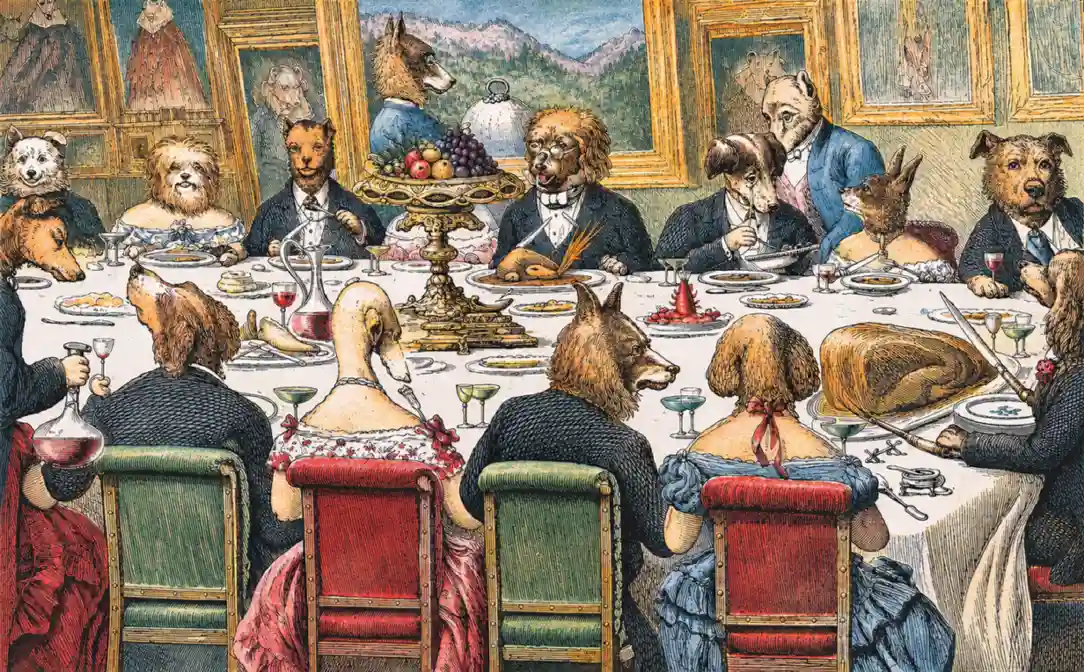
To Whom It May Concern:
For 25 years, I’ve been hosting Thanksgiving dinner. They began in our modest apartment in Pasadena at a time when money was tight and hopes and dreams were bright. Presaged by road trips to the famous Huntsinger Ranch in the San Fernando Valley, birds roamed free less as captives and more like privileged avian creatures in California pastures.
We settled on the margins of my husband’s hometown, where a carousel of 30-something siblings were also newly married. New faiths and families pulled each in different directions, but all were expected to make an appearance at his parents’ on Thanksgiving Day.
Deep-Fried Turkey was the standard fare — Detroit, Dallas, the NFL — friends, cousins, and ne’er-do-wells: come one, God willing, COME ALL! Their Cauliflower Pie, a cherished standby, was more of a religious sacrifice. Thus, a split-second decision: opt out of the derision and create for myself a new tradition.
Seating and silverware were scarce my first year, and I’ll admit that we (my new sister-in-law and me) ate at the kitchen counter whilst our new husbands joined their family at table. (Bitter! Party of 2?) We borrowed pots, purchased pans (the French bisque soup was Au Bon Pain). While turkey and stuffing underwent revision, our Thanksgiving feast was the new tradition.
The family grew, as they do: more square feet and mouths to feed; china and crystal patterns are now complete. Today, it’s a well-rehearsed ride off Beverly Drive — and why do they still request that silly Cauliflower Pie? Mutiny on the bounty may’ve changed the county, but the beat goes on, by and by.
So many have come and gone through the years, just like Leaves: blowing in and out of our lives after a single season. Or Branches: more sturdy, but always seem to break off in a storm. Finally, the Roots: the constant infrastructure of sweet family life. Dear Editor, here’s why I write:
My sister-in-law — with whom I began this journey at my kitchen counter a quarter century ago — has never once asked us or anyone to her home on Thanksgiving. Year after year, we always dine here, but last year my ask came a little too dear. Her declination came as a shock and, as I have stated, it’s a tradition I created but I’m losing the spirit of the day.
Signed,
“Down & Out in Beverly Hills”

Dear Beverly Hills:
Those capricious leaves you’re referring to aren’t decorations or seasonal holiday guests, but rather the very vessels of life and limb. Photosynthesis converts sunlight and water into sugar, and carbon dioxide into oxygen. Herbivores eat plants; carnivores eat herbivores; and both are dependent on O2. See how that works? In fact, your analogy of fickle leaves that come and go is flawed. They’re the food of life.
According to Thomas Hobbes, life in a state of nature is “solitary, poor, nasty, brutish, and short.” (Just ask any Turkey.) But for humans, pure self-interest leads to something called anarchy, and the father of modern political philosophy argued that a Social Contract — an implicit agreement among the members of a society to cooperate for social benefits — was the cornerstone of civil society.
So, as you concoct your sides and Cauliflower Pies, remember man and beast are different. Political, legal, and professional relationships are all based on contracts, and if your relationship with your sister-in-law is contractual, then best to let her see the fine print. People can’t play by the rules if they don’t know what they are.
If, however, your relationship is personal, remember these are characterized by seemingly selfless acts of service, and a secret ingredient called the miracle of forgiveness. For the great and good will come and go; the seasons change (your in-laws know); the sweet spot here is not to reap, but rather share and sow.
It’s a rumor, dear readers, that the very first Cauliflower Pie was baked in the royal kitchens of Hampton Court Palace in 1415 to celebrate King Henry V’s victorious return from France after the Battle of Agincourt. Spiced and baked in rich butter, the dish quickly became a closely guarded secret among the monarch's inner circle—until, alas, it escaped the palace walls to become a beloved staple now claimed by both England and France.