CHARLATAN
The Exposé of Politics & Style

Spring break is something more than a one-to-two-week academic vacation in March and April. It’s a rite of passage and existential pause in which the world breaks from everyday life to embrace nature, adventure, and to work out not how we survive but why. Spring 2026 saw record-breaking air travel, with an estimated 171 million passengers flying on U.S. airlines between March 1 and April 30. Giving Mothers, everywhere, a week’s reprieve from the carpool to consider the summer enrichment schedule, and to create a memorable excursion to the audacity of hope.
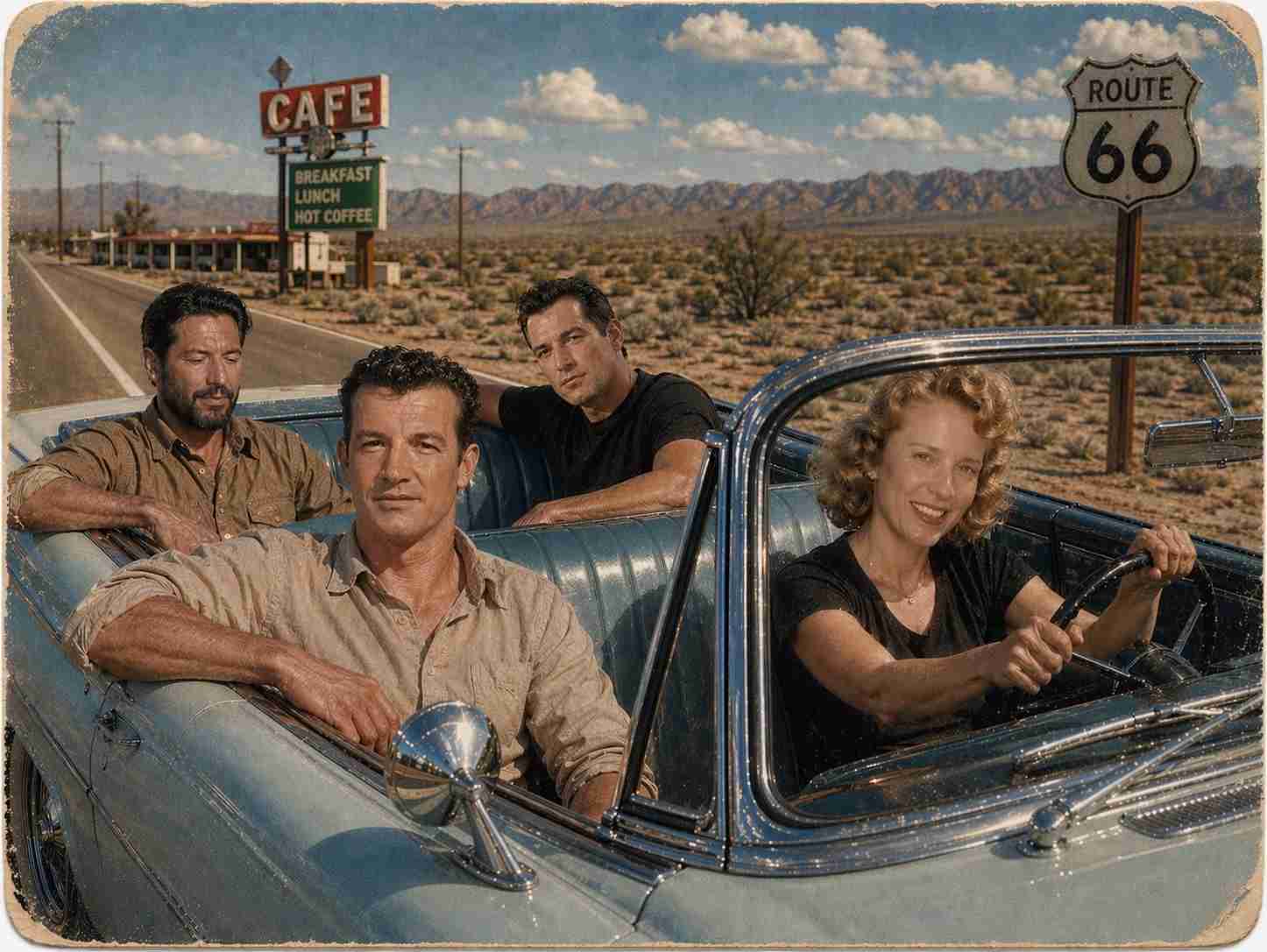
Nearly 3 million US passengers per day took flight into international destinations like Mexico and the Caribbean, whilst earthbound road warriors headed for their #1 domestic destination in the Sunshine State. Coincidentally, where spring break first kicked off nearly 100 years ago. And as U.S. Route 66 approaches her 100th anniversary this week on 30 April 2026, the iconic "Mother Road" is experiencing a major milestone, too.
Revitalization projects are restoring neon signs, classic diners, and motels across the 8-state, 2,448-mile route. John Steinbeck’s Pulitzer and Nobel Prize-winning opus: “The Grapes of Wrath” storied a great highway across the American frontier with timeless anecdotes, carrying families away from hardship toward a promise of hope. The Road didn't just go somewhere. It meant something. With the Dust Bowl and Great Depression looming, it was a belief that if you just kept driving things would get better. “We don’t take a trip. A trip takes us.” From my own native Kingman, Arizona — considered the heart of the Mother Road — it was said of U.S. Route 66: “It’s not the end of the earth but you can certainly see it from here.”
As the seams of the nation were being stitched together, the Miss Mojave and Miss Arizona pageants were simultaneously taking shape, and America’s bathing beauty contestants were evolving into talent competitions, academic scholarships, and professional careers with civic platforms. Since 1921 — just one year after women were granted the right to vote — Miss America has presented the “All-American girl” trending toward diversity. Cheryl Brown broke the color barrier in 1970; Heather McCallum broke the sound barrier as the first deaf Miss America in 1995; and Deidre Downs was crowned the first openly gay Miss America in 2005.
From the Grand Canyon National Park to the Hualapai Indian Reservations, my own reign as a pageant queen fell squarely at the crossroads of the American Contradiction. Jack Kerouac’s “On the Road” spoke to both when he wrote: "There was nothing behind me, everything ahead of me, as is ever so on the road."
The glow of Las Vegas can be seen 100 miles away in Death Valley, and the yellow light on its horizon at midnight resembles a sunrise—as though a billion borrowed stars fallen to earth are pinned there, refusing to go out. Like a wheel of fortune, my late husband, Senator Don Ashworth, and I would spin the odometer on our family station wagon at least once for each of the seven children we’d bring into the world. That’s because we believed "good students go places," and set our sights on the American dream long before we ever saw or settled the bill. LendingTree puts the price tag of raising a child in 2026 at $303,418 per child, an average of $16,857 per year. At our 35-year mile marker, Don steered our crew with a slogan: “Keep a’goin.”
Martin Luther King Jr.’s “The Purpose of Education” outlined why higher learning should blend utilitarian efficiency with moral character. “Intelligence plus character is the true goal,” he wrote, and in that spirit our children went on to receive both a college education and a college experience. They’d dance at Mardi Gras in Rio de Janeiro; climb the Great Pyramid of Giza in Egypt; and experience the magic of the Sea of Galilee. Shores upon which one’s skills and talents coalesce into higher callings.
Yet for every international time zone my children traversed, I was sitting in a carpool for better or worse. Erik Erikson’s 8 Stages of Psychosocial Development provided trailheads to the virtues: Hope (Newborns); Will (Age 1-3); Purpose (3-6); Competence (7-11); Fidelity (12-18); Love (19-29); Care (30-64); and Wisdom (65-onward). It could fairly be said, “I Drive, My Children Travel.”
"I Drive, My Children Travel."
Curriculum, for instance, may be grounded at school, but it’s all the extracurriculars that summon a carpool. In 2026, soccer is the #1 youth sports market in the United States. 1 in 4 children play the game (6-12), and their parents who foot the bill to the tune of $1,000 per soccer player, annually. "WE ARE 26" will unite three nations in June — Canada, Mexico, and the USA — with 48 teams competing in the first multi-national tournament at the 2026 FIFA World Cup.
Nearly 30 million American boys and girls, men and women, age 6 and up are playing basketball, too. The NBA G League’s Birmingham Squadron picked up my grandson’s returning player rights last month, even though less than 2% of the NCAA’s 35,000 student-athletes ever turn pro. We have cheerleaders, flag twirlers, and even a prom queen in our retinue, but the tide it seems is turning away from the gender roles of yesteryear to gender equality: An egalitarian state where all men and women are created equal.
To wit, roughly 72% of the U.S. population use social media, with American teens spending 5+ hours per day before the screens, according to Pew Research. Australia and Indonesia have implemented bans on social media for children under 16 which is creating a global trend. France, Greece, Norway, Spain, Denmark, Slovenia, India, and the United Kingdom are planning and implementing bans for children under 15. As of early 2026, over 17 states have enacted laws requiring parental consent or outright banning children under the ages 14-18 respectively from various platforms to curb addiction and improve mental health.
Leading that chorus is the landmark “K.G.M. v. Meta et al:” a 2026 California bellwether trial where a jury found Meta (Facebook, Instagram) and Google (YouTube) “negligent for intentionally designing addictive platforms that damaged the mental health of minors.” There are presently 4,000+ pending lawsuits from parents, school districts, and state attorneys general targeting 166 companies worldwide. For their addictive software designs, and mental health harm to minors, judgments currently exceed $500 million in damages and are climbing.
Dorothy Law Nolte’s 1954 short newspaper column "Children Learn What They Live" speaks to the consequences. "If a child lives with criticism, they learn to condemn; If a child lives with shame, they learn to feel guilty; and If a child lives with ridicule, they learn to feel shy” but I’d go further. Ridicule at scale — which is what social media delivers — doesn't just produce shyness. It produces discrimination.
“The Negro Motorist Green Book” was an annual travel guide that pinpointed precisely where Blacks could dine, lodge, gas up, or even drink from a water fountain along Route 66. Published from 1936 to 1964 by Victor H. Green, roughly half (44 out of 89) counties along the route were known colloquially as "Sundown Towns” — all white communities banning Black people with local laws, intimidation and violence after dark. During the Jim Crow era, nearly 4,000 Black men, women, and children were lynched in the Southern United States, according to the NAACP.
Likewise, Google's algorithms operate like Sundown Towns, deciding who belongs and who doesn’t. As children and young adults passively doomscroll, they mistakenly believe they’re doing so anonymously whilst Big Brother (Google) surveils, profiles, tracks, and exploits every move. Case in point: Meta's algorithms intentionally amplified anti-Rohingya hate content in Myanmar from 2015 to 2017—promulgating a genocide that displaced 700,000+ and caused tens of thousands of deaths. Meta executives told shareholders their algorithms did not cause polarization, while the United Nations described Meta’s role as “textbook ethnic cleansing.”
The novel Wigwam Motels and Tee Pee Villages notwithstanding, there's no better way to dismantle a personality, a culture, or a sovereign tribal nation than to isolate it. Social media opens a window to a wider world, simultaneously closing the door to a physical reality. According to the Mayo Clinic, children and young adults that spend three hours a day or more using social media are at a higher risk for experiencing anxiety, addiction, depression, FOMO (the fear of missing out), and cancel culture.
That’s why I drive. To connect with daughter Candace across town; to cheer granddaughter Brianna at her NPC Classic Body Building Competition; and to chase my grandson’s new Root Beer Float Mobile across the Utah Valley. A wall in our kitchen was papered with maps to remind us not only that good students go places, but that a “journey of a thousand miles begins with a single step.”
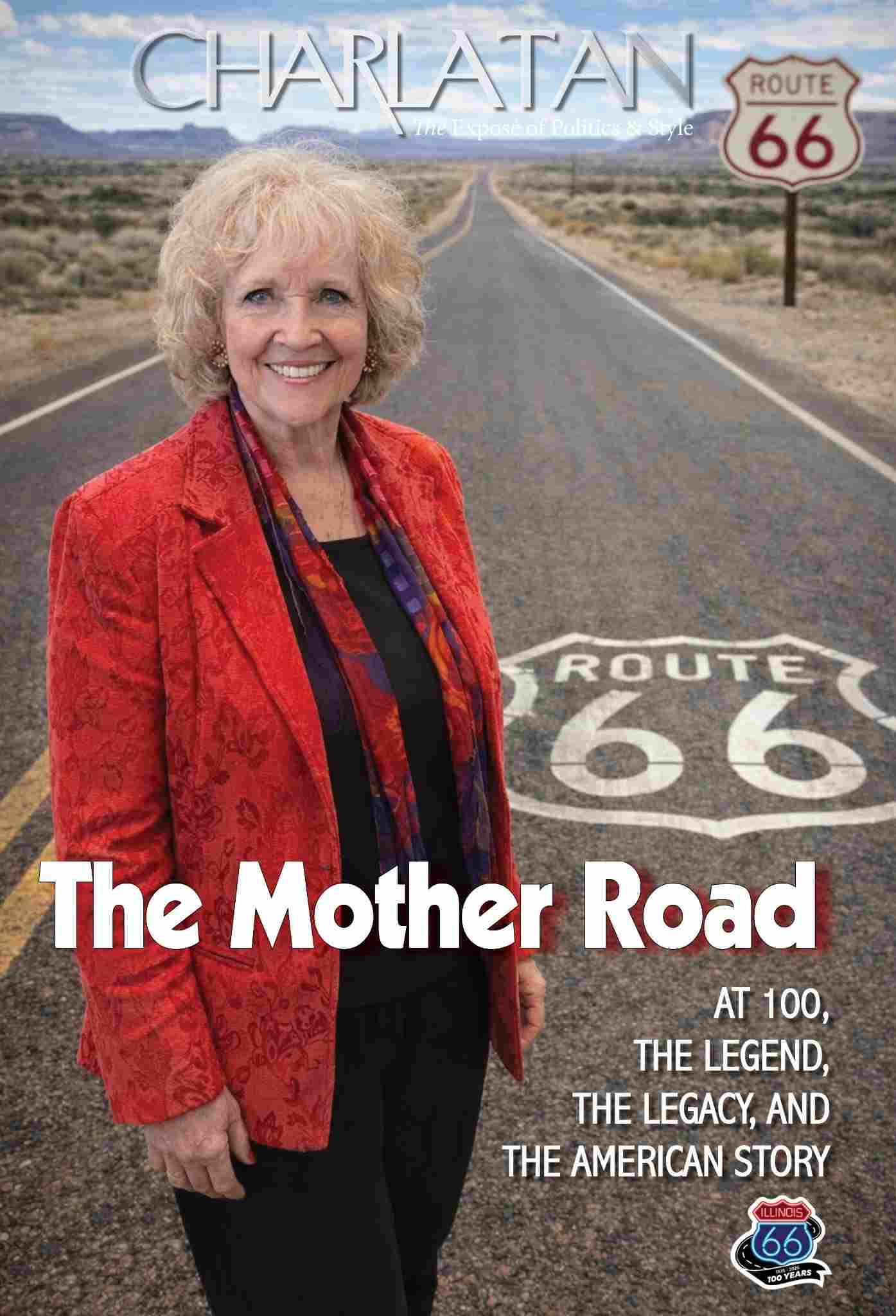
Route 66 turns 100 on April 30th and I've been on it almost from the start. My childhood home, Bonelli House, at 430 East Spring Street in Kingman, Arizona is steps away from the historic Route 66 Museum and Visitor Center. Major cattle ranchers and retailers who held the keys to the city, I didn’t grow up just driving Route 66. I grew up living on it.
“The free exploring mind of the individual human is the most valuable thing in the world," Steinbeck wrote, and when receiving the Nobel Prize in Literature he offered one last tip for the road: "…to declare and to celebrate man's proven capacity for greatness of heart and spirit."
When Don started law school, I began reading biographies about America’s founding fathers. The Pulitzer Prize-winning “Washington: A Life” drew from the Enlightenment that natural man is born with free will, self-determination, and agency. So why do our freedoms sometimes collide with others’ liberties?
As it happens, freedom riders don't have an Express Lane. They drive in one diagonal lane alongside 349 million others; yielding to road signs like personal safety, mutual respect, and the inalienable rights of others. GPS provides alternate routes, but all roads lead to the republic.
That's because the American way of life wasn't designed as a vacation. It's a carpool. Diversity is the act of thinking independently — together. So, what's your dream? I can point you almost anywhere in America from here. 🇺🇸

All the World’s a Stage
Make sense of the week's news.
Charlatan reviews the worldview.
CHARLATAN
The Exposé of Politics & Style