

“Over the course of a lifetime, we face only a few moments where the decisions we make, and the actions we take, will shape our history for years to come,” former U.S. President Bill Clinton wrote this week. “This is one of them.” The People of the United States must now decide for themselves if or whether to preserve, defend, or redefine their right to bear arms.
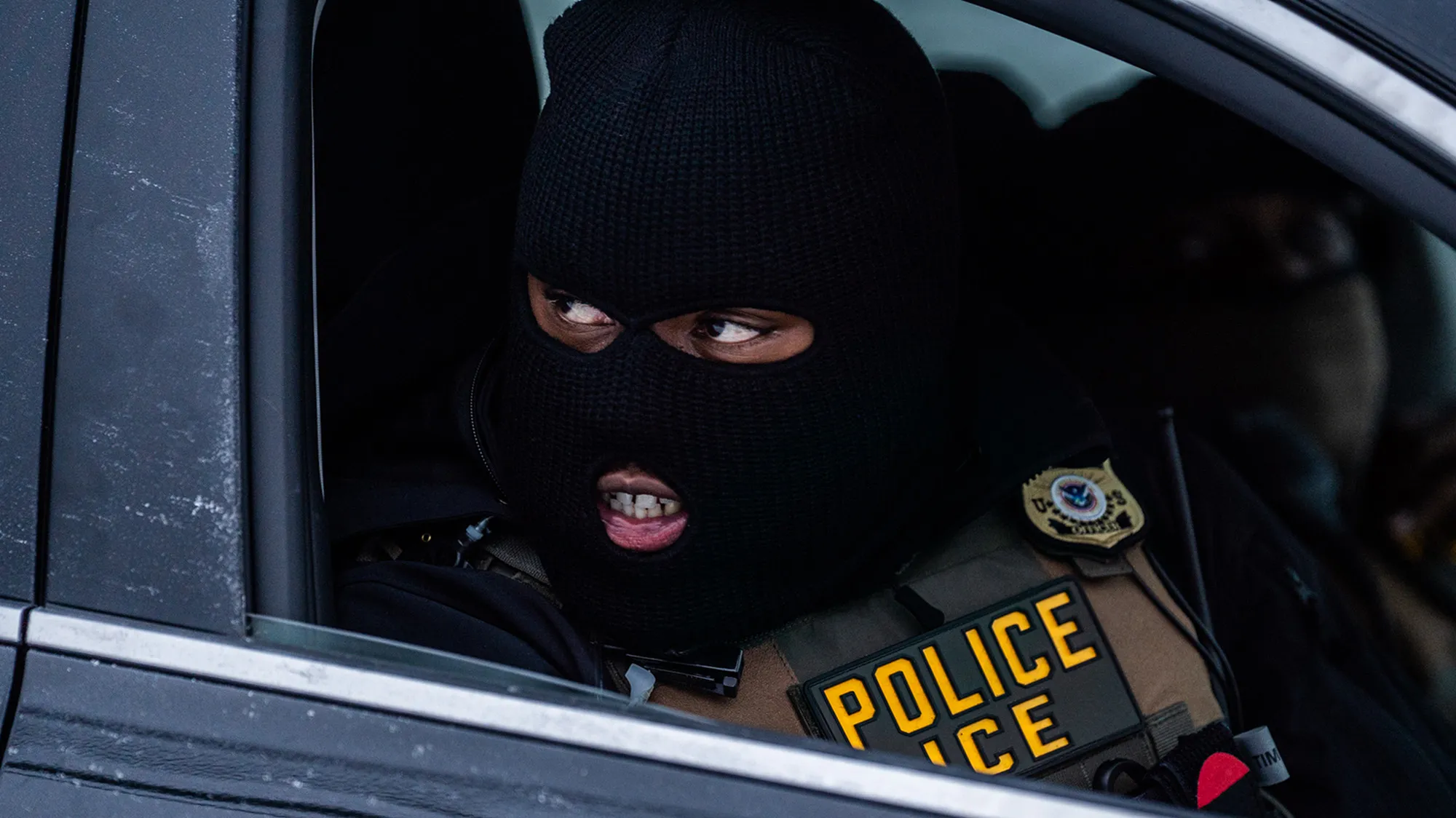
Alex Jeffrey Pretti — a 37-year-old American Intensive Care Unit nurse for the United States Department of Veterans Affairs — was shot and killed by United States Border Patrol agents in Minneapolis on 24 January 2026. Pretti had presented to protest Operation Metro Surge — a U.S. Immigration and Customs Enforcement (ICE) and Border Patrol mission to apprehend and deport undocumented immigrants across Minnesota.
During the second Trump administration, the Alien Enemies Act was used to quickly deport hundreds of thousands of suspected illegal immigrants with limited or no due process: Roughly 65,000 people are in detention; 4,000 people are reported missing; and at least 45 people are confirmed dead. Among them American citizens.
Multiple videos clearly show Pretti using only a phone to record federal agents before being shoved by an agent, pepper-sprayed, and pinned on the street by officers from whence one emerged from the scrum with Pretti’s holstered and registered gun, after which at least 10 shots were fired by two agents in less than five seconds into Pretti’s back, chest and neck from behind. Both agents have lawyered up, and a GoFundMe account called “Alex Pretti is an American Hero” has raised nearly $2 million from thousands of Americans. Hedge fund billionaire Bill Ackman — who endorsed Trump in 2024 United States presidential election, and whose criticized the 2024 pro-Palestinian protests on university campuses — is among the biggest doners.
“No one” FBI Director Kash Patel says, “can bring a firearm, loaded, with multiple magazines to any sort of protest that you want. It’s that simple.” President Trump weighs in:
I don't like any shooting. I don't like it. I want a very honorable and honest investigation, but I don't like it when an agitator goes into a protest and he's got a very powerful, fully loaded gun with two magazines loaded up with bullets also. That doesn't play good either.
Be that as it may, many Trump supporters were carrying fully loaded firearms during the Jan. 6 Attack on the U.S. Capitol, and Trump in his second term issued blanket pardons to them all.
Homeland Security Secretary Kristi Noem claimed Pretti “attacked officers and was brandishing a gun at the scene.” White House Deputy Chief of Staff posted Pretti was “an assassin,” and Trump has called him an "insurrectionist." However, videos looping of Pretti’s execution by a federalized military force reveal that “officers may not have been following protocol before they shot Pretti,” according to Stephen Miller.
Was Pretti’s assassination premeditated? Reports indicate that agents involved in recent violent encounters and crackdowns in Minneapolis have been actively using Mobile Fortify — a smartphone-based facial recognition app — that is designed to randomly scan civilians, crosscheck their citizenship status, and identify and track protestors.
To wit, newly surfaced videos in January 2026 show Alex Pretti kicking and damaging a federal vehicle during a protest in Minneapolis—just 11 days before he was fatally shot by federal agents. The footage shows Pretti yelling at federal military agents, spitting at their vehicle, kicking their vehicle’s taillight, and breaking the taillight’s cover. Agents held Pretti on the ground briefly before letting him go.
The U.S. Department of Homeland Security has used Mobile Fortify to scan faces and fingerprints in the field more than 100,000 times, according to a lawsuit brought by Illinois and Chicago against the federal agency. It’s a dramatic shift from immigration enforcement’s use of facial recognition technology, heretofore limited largely to investigations and ports of entry and exit, legal experts say.
Without giving a timeframe, Trump says: "We're looking, we're reviewing everything and will come out with a determination," before removing Gregory Bovino and replacing him with White House Border Czar Tom Homan who says, "We are not surrendering the president's mission on immigration enforcement," indicating that he wants access to undocumented immigrants who are in state prisons and county jails. "Members of the community are not the targets of our operations," he confirms, but vows 'massive changes' and a drawdown of some 3000 ICE agents “until the problem is gone.”
Republicans trying to protect their threadbare majority in the U.S. House, and who face several competitive races in the Senate, consider Trump’s about-face and vacillation on the subject “very likely to cost them dearly with the core of a constituency they count on,” according to the legal director of the Second Amendment Foundation. The Justice Department even opened a Civil Rights Inquiry into Pretti’s execution, adding the latest chapter to America’s self-proclaimed right to bear arms, and another opportunity to reckon with and atone with the United States Constitution. The Second Amendment begins:
A well-regulated Militia, being necessary to the security of a free State, the right of the people to keep and bear Arms, shall not be infringed.
“District of Columbia v. Heller” (2008) reaffirmed that right to self-defense, and to the extent its vague “New York State Rifle & Pistol Association, Inc. v. Bruen” (2022) went further to enshrine the right of every American to carry weapons in public spaces. While the Second Amendment was ratified in 1791, it was the Gentleman from Virginia, and soon to be 4th U.S. President of the United States James Madison, who explained precisely why.
Federalist No. 46 — an essay by a 30-something year old politician in between gigs as a Delegate and Member of Congress — was first published in “The New York Packet” on 29 January 1788. Under the pseudonym “Publius,” young Madison was trying to ratify the right to bear arms into the proposed U.S. Constitution through an article entitled: "The Influence of the State and Federal Governments Compared.”
In sum, Madison argued that a civilian-based militia of approximately half a million citizens, organized by state governments, served as a vital defense against potential tyranny by a federal standing army. In Federalist No. 46, Madison argued that armed citizens would protect their own liberties and state sovereignty against federal overreach.
The Second Amendment was designed to empower armed citizens to protect their liberties against federal overreach.
Through the lens of 18th century concerns, Madison drafted the Second Amendment in part to ensure that Congress could not disarm state militias from quelling slave revolts or insurrections. Seasons change, but the path so often remains the same, as do the very same concerns that reach us today.
Federalism — the constitutional division of power between U.S. state governments and the federal government of the United States — was the founding father’s principal concern when drafting and ratifying the Second Amendment into the Constitution. Specifically, Militias vs. Standing Armies: Madison was keen to ensure that state militias couldn't be disarmed by the federal government. In Federalist No. 46, he argued that armed citizens in state militias would counterbalance a Federal Army.
The Department of Homeland Security (DHS) has shot 13 people during immigration enforcement operations since September. At least 45 people have died in ICE custody; and Federal agents have shot three people in Minneapolis in recent weeks, killing two U.S. citizens, Renee Good and Alex Pretti.
DHS secretary Kristi Noem says, “I don’t know any peaceful protester that shows up with a gun and ammunition rather than a sign,” adding, “Everything I've done, I've done at the direction of the president and Stephen Miller.”
“You can’t have guns. You can’t walk in with guns. You just can’t. You can’t walk in with guns. You can’t do that,” says Trump. But the question before the nation isn’t whether to forgive Noem’s misunderstanding of the Second Amendment, or Trump’s misrepresentation of the same, but rather if or whether the nation can accept, embrace or even comprehend the tenets of the Second Amendment.
Replacing Gregory Bovino with White House Border Czar Tom Homan in Minneapolis presents a murky problem in a specific relief. Either Americans stick to the originalist text to bear arms against the threat of a growing Federal Army — at present nearly 100,000 agents strong — or they adopt restraints and guardrails on the Insurrection Act of 2025—which Madison characterized in 1807 as a “potential nightmare.”
Republicans running afoul of the gun lobby for demonizing a legally armed citizen, otherwise peaceably assembled, presents the clearest path to a majority since Madison.


Make sense of the week's news. Charlatan reviews the worldview.

Make sense of the week's news. Charlatan reviews the worldview.

Archives