



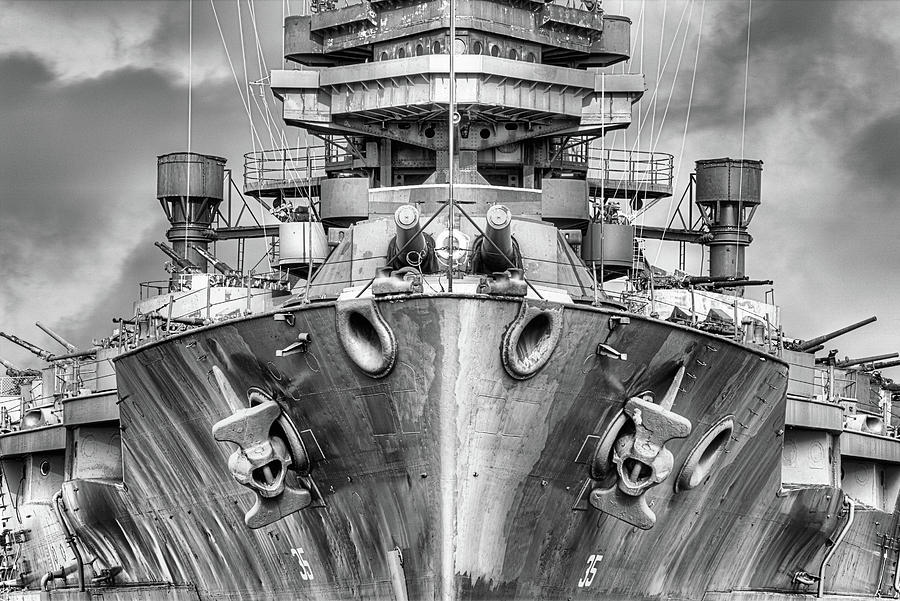
The significance of the USS Abraham Lincoln Nimitz-class nuclear aircraft carrier arriving in the Persian Gulf with its carrier strike group composed of cruisers, a destroyer squadron, 65-70 aircraft, nuclear submarines, and roughly 7,500 personnel could be seen as a deterrence. The USS Gerald Ford arriving in the region on Saturday constitutes a target. To understand what a second American attack on Iran would mean for the world we must first reckon with the audacity of the nuclear question itself.
Iran at present possesses a sophisticated and advancing nuclear infrastructure that has brought it to the threshold of weapons capability — what analysts call a "breakout" position. However, Iran is a nuclear-threshold state, not a nuclear-armed one, but the IAEA has estimated that Iran possesses enough 60%-enriched material that, if further enriched, could theoretically fuel multiple nuclear devices. Breakout time — the period required to produce enough weapons-grade fissile material for one bomb — has been assessed by U.S. and Israeli intelligence at somewhere between a few weeks and several months, depending on the scenario.
The evidence that Operation Midnight Hammer destroyed Iran's nuclear arsenal is, in a word, absent. The evidence that it severely damaged three key facilities is solid. The evidence that it set the program back meaningfully is credible. The evidence that Iran dispersed its fissile material beforehand and is already reconstituting in deeper, harder-to-reach tunnels is, frankly, alarming.
What Midnight Hammer appears to have achieved is not the end of Iran's nuclear ambitions but rather its acceleration underground — pushing a program that operated in the open (under IAEA monitoring, however imperfect) into the shadows of Pickaxe Mountain and beyond. The American bombs were real. Settling the nuclear question was not.
The American bombs were real. Settling the nuclear question was not.
At Isfahan, satellite imagery analysis by the Institute for Science and International Security reveals a massive logistical operation to seal underground tunnel entrances — covering them with enormous piles of dirt using continuous heavy engineering equipment — while the northern entrance remains open and reinforced with missile chicanes designed to block direct penetration by cruise missiles, suggesting Iran is using this active opening to transfer centrifuges and sensitive equipment rescued from other sites inside. Iran is not rebuilding in the open. It’s rebuilding in the dark, beneath layers of concrete and soil specifically engineered to frustrate the very bombs that would be sent to stop it.
The Institute for Science and International Security (ISIS) founder David Albright has accused Tehran of exploiting diplomatic pauses. "Stalling the negotiations has its benefits. Over the last two to three weeks, satellite images reveal Iran fortifying its Parchin military complex against aerial strikes as US military build-up in region gathers pace. "Every week of talks equates to another week of earthmovers."
Perhaps the most alarming element of the current intelligence picture concerns not enrichment but weaponization. Satellite images also show that a large cylindrical chamber approximately 150 feet long appears to have been recently built at the Parchin military complex — a site where Iran has historically tested high explosives that can be used as triggers for nuclear warheads. ISIS data confirms: "Ongoing construction and the presence of what appears to resemble a long, cylindrical chamber, possibly a high-explosives containment vessel," while noting such vessels are "critical to the development of nuclear weapons."
And then there is the matter of what Iran already possesses. The Washington Institute for Near East Policy warns that Iran could probably develop crude nuclear weapons without rebuilding its program to any significant degree, as it likely retains enough highly enriched uranium and the chemical processing equipment required to fashion this material into several crude bombs — even if they are not yet missile-deliverable.
Bombs needn’t fly on missiles to be catastrophic. They need only exist. Iran has adopted what analysts are calling a "differential reconstruction doctrine" — combining a semblance of willingness for diplomacy with the West while prioritizing rehabilitation of air defense capabilities, restoration of the ballistic missile program, and acceleration of the fortification of nuclear facilities deep underground. This is not improvisation. It is strategy. The missiles buy deterrence. The buried facilities buy time. The diplomacy buys both.
According to sources in Tehran cited by the Institute for International Political Studies, Iranian Supreme Leader Ali Khamenei authorized the development of miniaturized nuclear warheads for ballistic missiles in October 2025 — even as his diplomats were seated across from Steve Witkoff in Muscat discussing enrichment limits.
The Islamic Republic is not choosing between war and the bomb. It is pursuing both, simultaneously, beneath the earth, while negotiators like Jared Kushner pretend Realpolitik in any way conceal either his or his father-in-law’s real estate ambitions in New Gaza or beyond.
Nine countries combine to possess approximately 13,000 or so nuclear weapons, and the U.S. and Russia hold nearly 90% of the global arsenal. The irony of the U.S. crowning itself the global watchdog over nuclear non-proliferation — the only nation to ever detonate a nuclear bomb on a civilian population in combat, eviscerating approximately 200,000 people in Hiroshima and Nagasaki in 1945 — reminds us that countries with no nukes equate to regime change.
Iraq, Libya, be damned, perhaps the most coldly rational lesson Tehran derived came not from its own history but from watching others. Saddam Hussein dismantled his WMD programs under international pressure; within a decade he was extracted from a spider hole and hanged. Muammar Gaddafi surrendered his nuclear ambitions in exchange for Western normalization; within a decade he was sodomized via the "Responsibility to Protect" doctrine with a bayonet in a ditch. The lesson required no interpretation: regimes that relinquish deterrent programs invite the fate of regimes that relinquish deterrent programs. The nuclear question, for Tehran, has never been merely about regional prestige. It is about regime survival.
Ayatollah Ali Khamenei, the 86-year-old architect of four decades of revolutionary consolidation, and near-absolute authority over the Islamic Republic, seems to have gleaned more from history than his U.S. counterpart. In coming days and weeks, one million trained, humiliated, and now unemployed Iranian soldiers could breakout into political parties, paramilitary groups, and rally around their ever further reaching flag.


Make sense of the week's news. Charlatan reviews the worldview.

Make sense of the week's news. Charlatan reviews the worldview.


Archives